Is Poor Posture Causing Your Neck & shoulder Pain? Simple Stretches That Help
Why posture matters
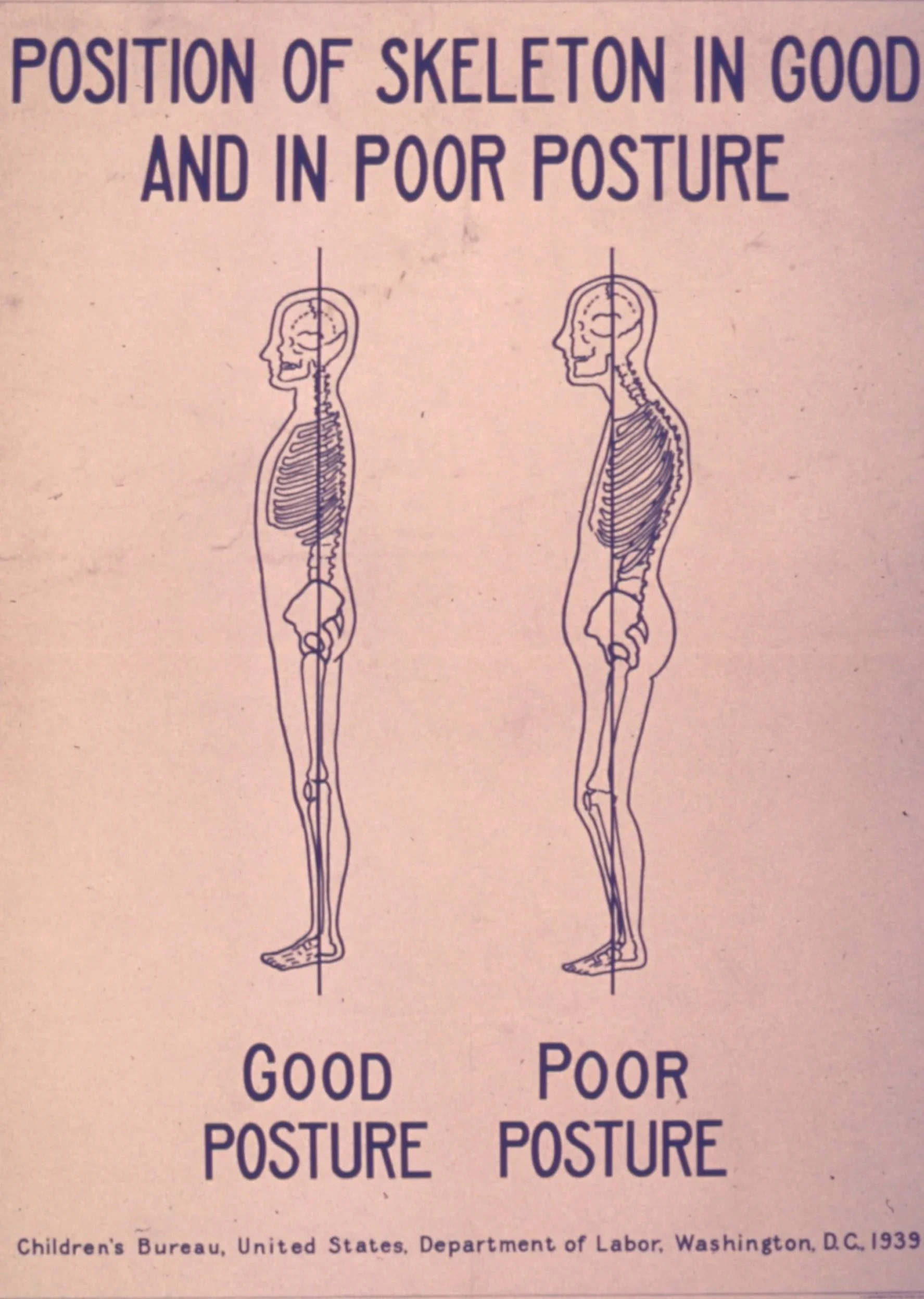
Even back in the 1930’s (long before cell phones) there was concern about bad posture.
Your mother (or grandmother) told you to stand up straight. You know it feels good when you do. Standing up straight is instant makeover.
It makes you look - and feel:
Taller
Leaner
Younger
More confident
But the benefits of good posture go way beyond looking good. The body likes to stand up straight. When your body is well-aligned, the bones and joint align nicely and no extra effort is required of your muscles. However, holding your head and shoulders forward, say to answer a text on your phone, takes work - a LOT of it.
Your head weighs about 10–12 pounds when it’s aligned over your shoulders. But as it moves forward, the leverage on your neck increases dramatically. For every inch your head shifts forward towards your screen, the effective load on the neck rises by roughly 10 pounds—meaning a few inches of forward head posture can create more than 40 pounds of stress on the neck and upper back!
Over time the muscles get exhausted which leads to pain - and adaptation. Some muscles become overly tight, others become chronically over stretched and our body lays down extra layers connective tissue to help hold our muscles in this unnatural position.
Which means, when you try to stretch and stand up straight, it’s hard - it may even feel impossible!
Ready to make a change? Find quick stretches to relieve stiffness and full length workouts to improve your posture here:
effects of Poor Posture: Neck Pain and Headaches
You know that your posture matters and you know that you look and feel better when you stand up straight. Yet it can be hard to do. Hours spent in the car and at a desk leave you looking and feeling slumped with rounded shoulders and a constant ache in the neck. You may find yourself regularly reaching for Advil at the end of the day and needing a thicker pillow at night to support your head.

Some common side effects of poor posture include:
Tension headaches
Back pain
Neck stiffness pain
Pain and limited mobilty in the shoulders
Rounded shoulders & a forward-head posture
Shallow breathing (which leads to more neck tension)
Though you may not have given much thought to your breath, I find that many of my clients with chronic neck & back stiffness are also shallow breathers who tend to overuse their chest and neck muscles to breathe. Learning to use their diaphragm and core muscles to breathe is often a break through for relieving patterns of chronic back, neck and shoulder tension.
The tricky part is that posture is a habit. You many not think much about it until you find yourself (again) rubbing your neck and shoulders at the end of the day.
simple ways to improve posture & reduce neck & shoulder tension
It’s also totally possible to rewind the effects of bad posture. Posture is a habit, which means that just like all habits, it can be changed through awareness and small, repeated actions. Habits can take time to break & rebuild though, so be patient with yourself.
The first (MAJOR) step is awareness - catching yourself when you find yourself leaning over your screen - relaxing your shoulders and sitting back in your seat while driving. It can also be helpful to recruit a friend or partner to point out when you start slouching.
Here are a few other simple actions to improve your posture:
Take breaks
From sitting, from your computer screen, from driving. Yes, it will disrupt your flow and that’s the point. Good posture is relatively easy to maintain for short periods of time but the longer we sit, or spend looking at a screen, the more likely it is that we will start to slump and round forward. Set a timer if you need to and take regular breaks, say 1-2 minutes for every 30-45 minutes of sitting, to stand up, stretch and walk around. Even in this short amount of time, your circulation will improve and your spine will have a chance to reset.
raise your screen to eye level
Looking down at phones, tablets, or laptops encourages the head to drift forward. A simple fix is to lift your screen up to eye level. Hold your phone out in front of you so that you can look at without tilting your head down. For laptops and computer monitors, raise them up so that the top of the screen is at or slightly below your eye line when looking straight ahead. This helps keep you head aligned over your shoulders, reducing strain on the neck and upper back muscles.
Stretch your chest
We spend a lot of time in the modern world holding things out in front of us (particularly screens and steering wheels). Over time, the chest muscles responsible for moving the shoulders forward, tighten, restricting movement and contributing to a rounded upper back posture. The long term solution to this includes strengthening the opposing upper back muscles (which become weak from being over-stretched and under-used). For quick relief, particularly at the end of the day, the stretches below are some of the most effective ways I’ve found to release tension and reset your posture.
Simple Stretches You Can Do at Home to Improve Posture and Reduce Neck & Shoulder Tension
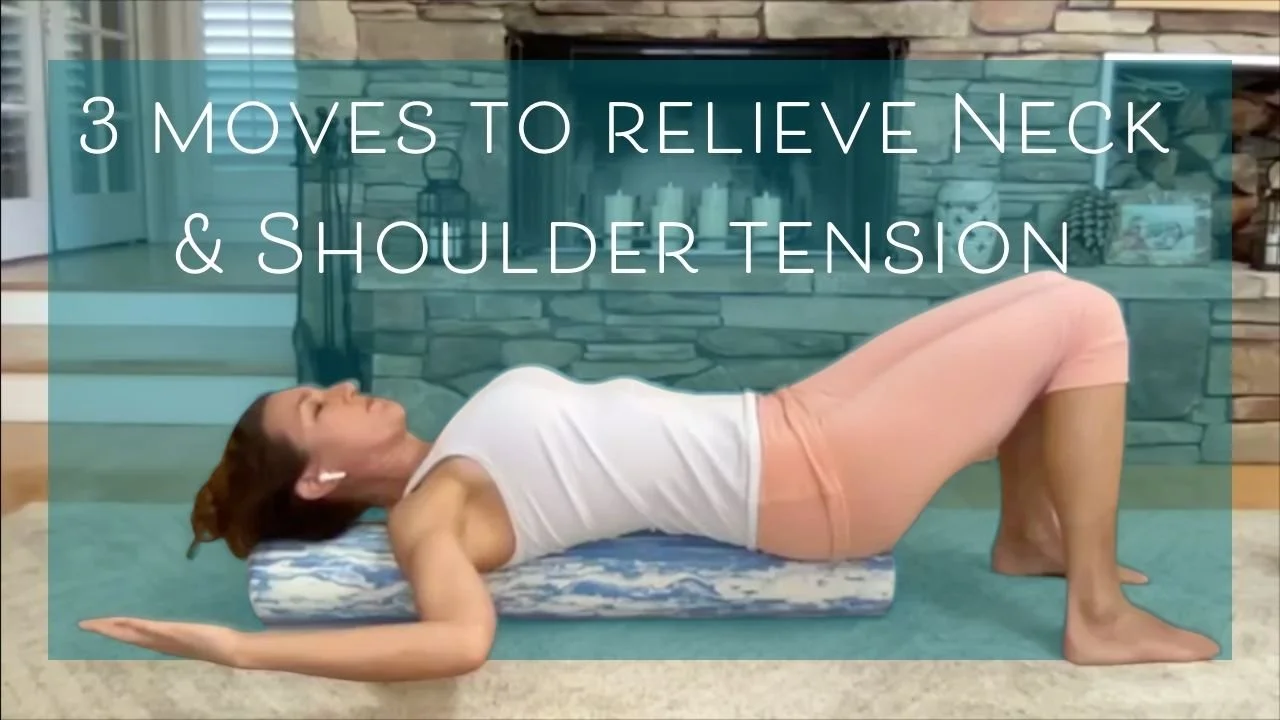
Improve your posture with these 3 quick and easy moves you can do at home with a foam roller to release tension in the upper back, neck, chest and shoulders to reverse the effects of a day staring at a screen.
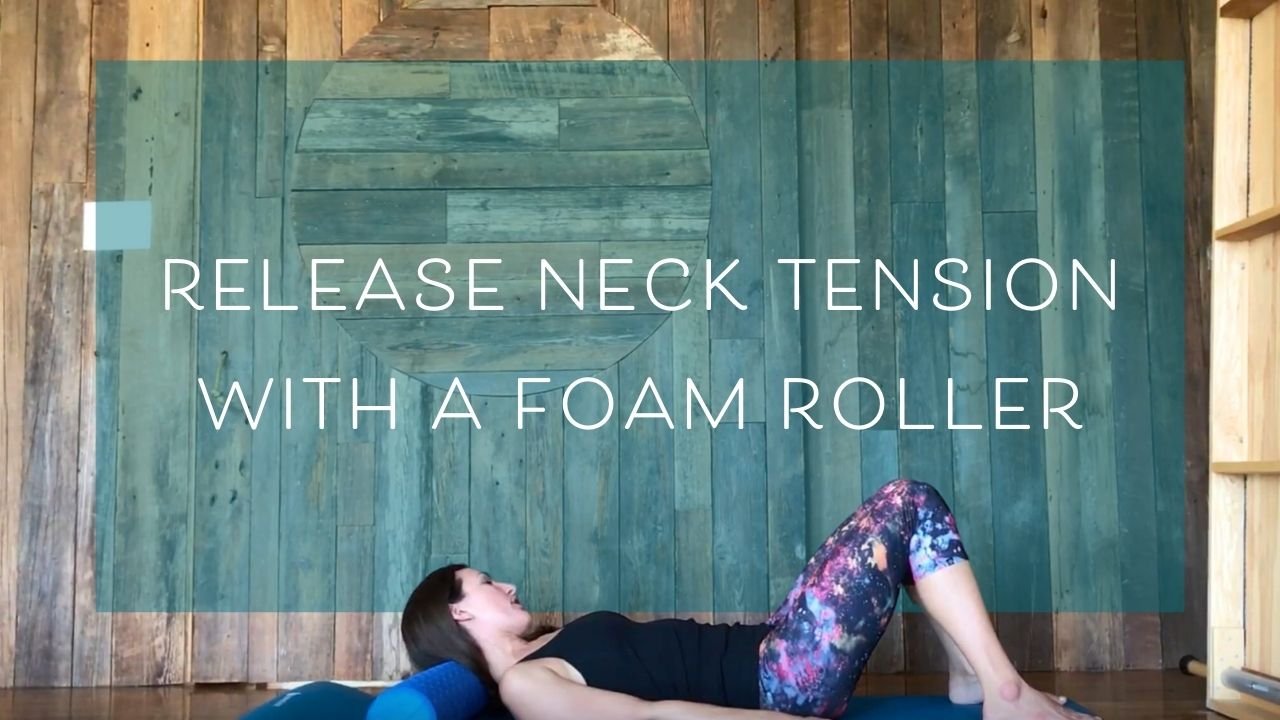
Relieve tension headaches naturally and soothe neck pain caused by poor posture using a foam roller.