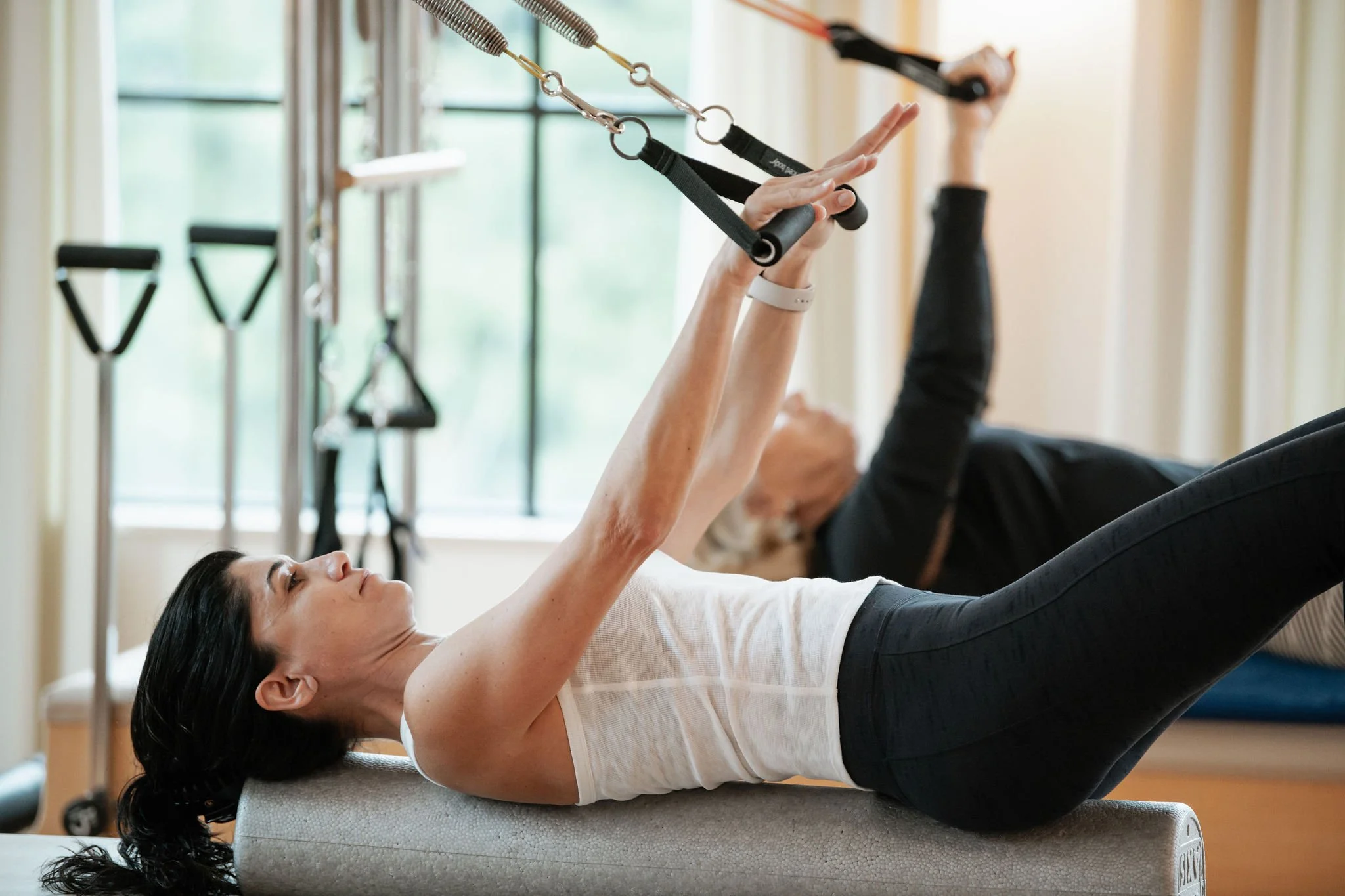
Osteoporosis Doesn’t Mean You Should Stop Moving
Being told you have osteoporosis or osteopenia can make exercise suddenly feel more complicated.
Can you still do Pilates? Yoga? Bend forward? Twist? What about crunches?
Strength training, weight-bearing exercise and balance work all play a role in maintaining bone health. But depending on your bone density, fracture history and overall health, some movements may need to be modified.
Understanding what may need to change can help you keep moving with confidence — focusing not just on what to avoid, but on all the ways you can still build strength.
What is Osteoporosis?
Osteoporosis is a condition in which bones become more porous and brittle, making them more likely to fracture. It often develops without obvious symptoms, which is why some people don’t know they have it until they have a bone-density scan or experience a fracture.
Osteopenia means bone density is lower than normal, but not low enough to meet the definition of osteoporosis.
The spine, hips and wrists are among the most common sites of osteoporosis-related fractures. In the spine, weakened vertebrae can be more vulnerable to compression fractures, which is one reason certain types of repeated or loaded spinal movement deserve more attention.
And it’s common. About 1 in 5 women and 1 in 20 men over 50 in the U.S. have osteoporosis.
Our bones are living tissue and are constantly being remodeled — old bone is broken down and new bone takes its place. Earlier in life, we generally build bone faster than we lose it. Over time that balance shifts, and osteoporosis develops when bone is being lost faster than the body can replace it.
Learn More About Osteoporosis:
International Osteoporosis Foundation: What is Osteoporosis?
Mayo Clinic: Exercising with Osteoporosis
Bone Health & Osteoporosis Foundation: Safe Movement & Exercise Videos
National Institute on Aging: Osteoporosis
Exercise & Osteoporosis
Exercising with osteoporosis isn’t just about avoiding certain movements. It’s also about making sure you’re doing enough of the things that help maintain strength, balance and bone health.
A well-rounded routine usually includes:
Strength training (i.e. weight training) to build and maintain muscle and load the bones
Weight-bearing activities such as walking, stair climbing or dancing
Balance work to help reduce fall risk
Posture and core-strengthening exercises to support the spine
Mobility work that is appropriate for your body
Strength and weight-bearing exercise are especially important because they challenge the bones in ways that can help maintain bone density. Balance, posture and mobility work matter for another reason: fewer falls means fewer opportunities for fractures.
Where Pilates Fits In
Pilates can be a very useful part of that plan.
It can help you build strength, maintain mobility and improve balance, posture, coordination and body awareness. It also provides plenty of ways to strengthen your core without relying on crunches or repeated spinal flexion.
But Pilates shouldn’t be the only exercise you do for bone health. Think of it as one part of a broader approach rather than the whole program.
Some Movements May Need to Change
If you have osteoporosis — especially if you have significant bone loss in the spine or a history of vertebral fractures — some movements deserve more care.
Repeated or loaded flexion (rounding) of the spine can increase stress on the vertebrae. That includes things like crunches, sit-ups and toe touches, as well as everyday movements where you bend from the waist with a rounded back (i.e. picking something up off the floor). Forceful or end-range twisting can also be a concern (more is not more).
That doesn’t mean your spine should never move or that every person with osteoporosis needs exactly the same restrictions.
A gentler twist may be appropriate for many people, while someone with very low bone density or a previous spinal fracture may need more specific guidance. Your bone density, fracture history, strength and overall health all matter.
Learn to Hinge When You Bend
One of the most useful movement skills to practice is a hip hinge.
Instead of folding forward by rounding your back, bend from your hips and knees while keeping your spine in a neutral position.
That same idea can help with everyday things like:
loading or unloading the dishwasher
gardening
reaching into a low cabinet
lifting a laundry basket
The goal isn’t to move stiffly or protect your spine from every bend. It’s to reduce unnecessary stress when you’re moving under load or spending time in positions that place more pressure on weakened vertebrae.
You Can Build a Strong Core Without Crunches
Your core (that includes your abdominal and back muscles) helps support your spine, transfer force between your upper and lower body and keep you steady during everyday movement.
And you do NOT need to do crunches to build it.
Your core muscles work any time they help keep your torso stable while the rest of your body moves. That can happen during:
standing strength exercises
balance work
arm or leg movements while keeping your trunk steady (i.e. bird dog and dead bug exercises)
carrying or lifting
That’s why modifying or avoiding repeated spinal flexion doesn’t mean giving up core work.
You can still challenge the core. The exercises will just look different from the sit-ups and crunches many of us grew up thinking were the definition of abdominal work.
Put It Into Practice
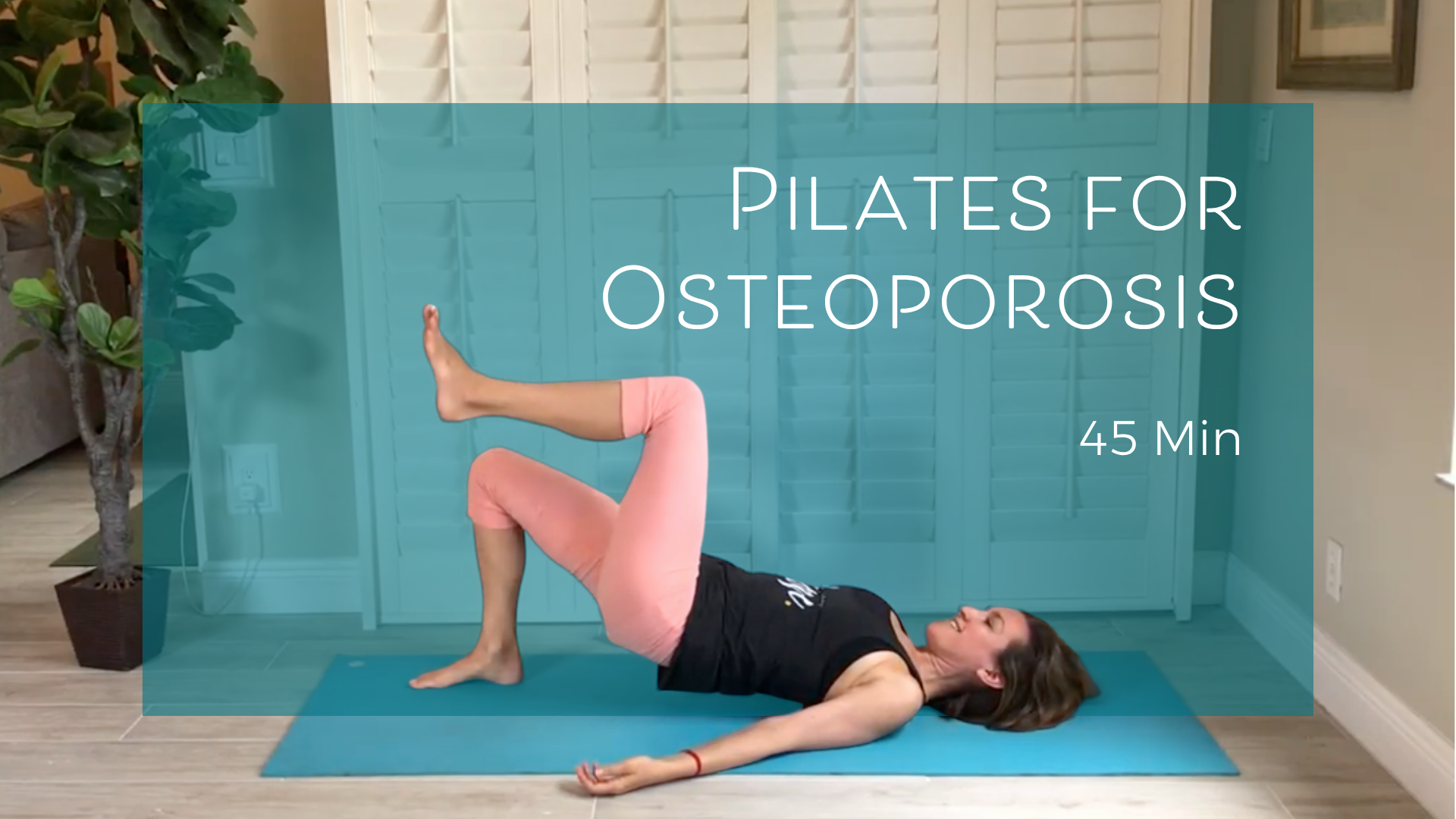
45-Minute Full-Body Pilates Mat Class for Osteoporosis
This full-body workout focuses on strength, balance and control while avoiding repeated spinal flexion and forceful twisting.
It’s designed to give you a way to keep challenging your body while being more mindful of the movements that may need to change with osteoporosis.
View the workout in the Online Pilates Studio →
If you have advanced osteoporosis, a previous spinal fracture, significant pain or you’re not sure which movements are appropriate for you, check with your healthcare provider or a physical therapist familiar with osteoporosis before starting a new exercise program.
The Takeaway
An osteoporosis diagnosis may change the way you approach some exercises, but it doesn’t mean you should stop challenging your body.
Regular exercise that includes strength training, weight-bearing activity and balance work helps maintain strength, balance and bone health. The key is learning which movements may need to be modified and finding other ways to build strength without placing unnecessary stress on the spine.
You can still work hard. You can still build a strong core. You can still improve your balance, mobility and confidence.
You may just need to be a little more thoughtful about how you get there.