
2 Years
That’s how long it took for me to finally FEEL it when I hiked my shoulders up towards my ears.
For 2 years, in every class, my (extremely patient) yoga & Pilates teachers would tell me, “Relax your shoulders,” and gently tap them.
One day, something clicked. I could finally feel myself doing it.
And once I caught that habit in class, I started noticing how often I carried that same tension outside of class.
All. Of. The. Time.
At my desk.
Driving to work.
Looking at my phone.
Any time I was stressed or concentrating.
No wonder my neck hurt. No wonder my shoulders were always stiff. They never got a break. I was so used to carrying that tension that I didn’t realize how much my everyday habits were adding to it.
The problem wasn’t that I simply needed to stretch more.
I needed to notice what I was doing in the hours between workouts.
That awareness changed things.
Your Hidden Habits
I’m guessing you have some habits that you don’t think much about either.
Maybe it's:
holding your breath or clenching your jaw when you concentrate
leaning in toward your computer screen
lifting your shoulders when you’re stressed
holding your phone low and looking down for long periods
tightly gripping your steering wheel
carrying your bag on the same shoulder
Neck and shoulder pain have lots of causes, but habits like these add unnecessary tension. When you spend a lot of time in the same position, your body adapts to what you’re asking it to do. The pattern becomes familiar — even normal — and the more familiar it becomes, the less likely you are to notice you’re doing it. Over time, that can make the habit harder to catch and change.
That was the piece I was missing.
Awareness Comes Before Change
Being told to “sit up straight” or “relax your shoulders” isn’t particularly useful if you can’t actually feel the difference.
I heard those cues for years.
What eventually mattered was developing enough body awareness to recognize:
THIS is what it feels like when my shoulders are tense.
THIS is what it feels like when I let them go.
Once I could feel the difference, I could catch the habit myself.
One of the greatest things I’ve gained from Pilates is that awareness. The exercises matter, but learning to feel and be able to control how your body moves is game changing — first in your workout and then into your daily life.
Start Looking for Patterns
That doesn’t mean monitoring your posture every second of the day.
Instead, get curious about the positions you spend time in — maybe a LOT of time in — that’s where those hidden habits show up.
The next time your neck or shoulders start aching, pause and think about what you’ve been doing for the previous hour or two:
Sitting at a computer?
Driving?
Scrolling on your phone?
Then notice your body:
Where are your shoulders?
Could you relax your jaw?
Are you breathing normally?
Are you gripping somewhere you don’t need to?
The goal isn’t to find a “perfect” posture. It’s simply to recognize when you’re holding unnecessary tension and to give your body another option.
Change It Up
Often, the best thing to do is move and change position . . .
Roll your shoulders & move your arms.
Move your back (gentle sidebands, twists or cat-cow movements).
Turn your head gently from side to side.
Take a few bigger, deeper, slower breaths.
Stand up if you’ve been sitting.
. . . something simple to interrupt the pattern often enough that one position doesn’t become the only position your body spends time in.
Put It Into Practice
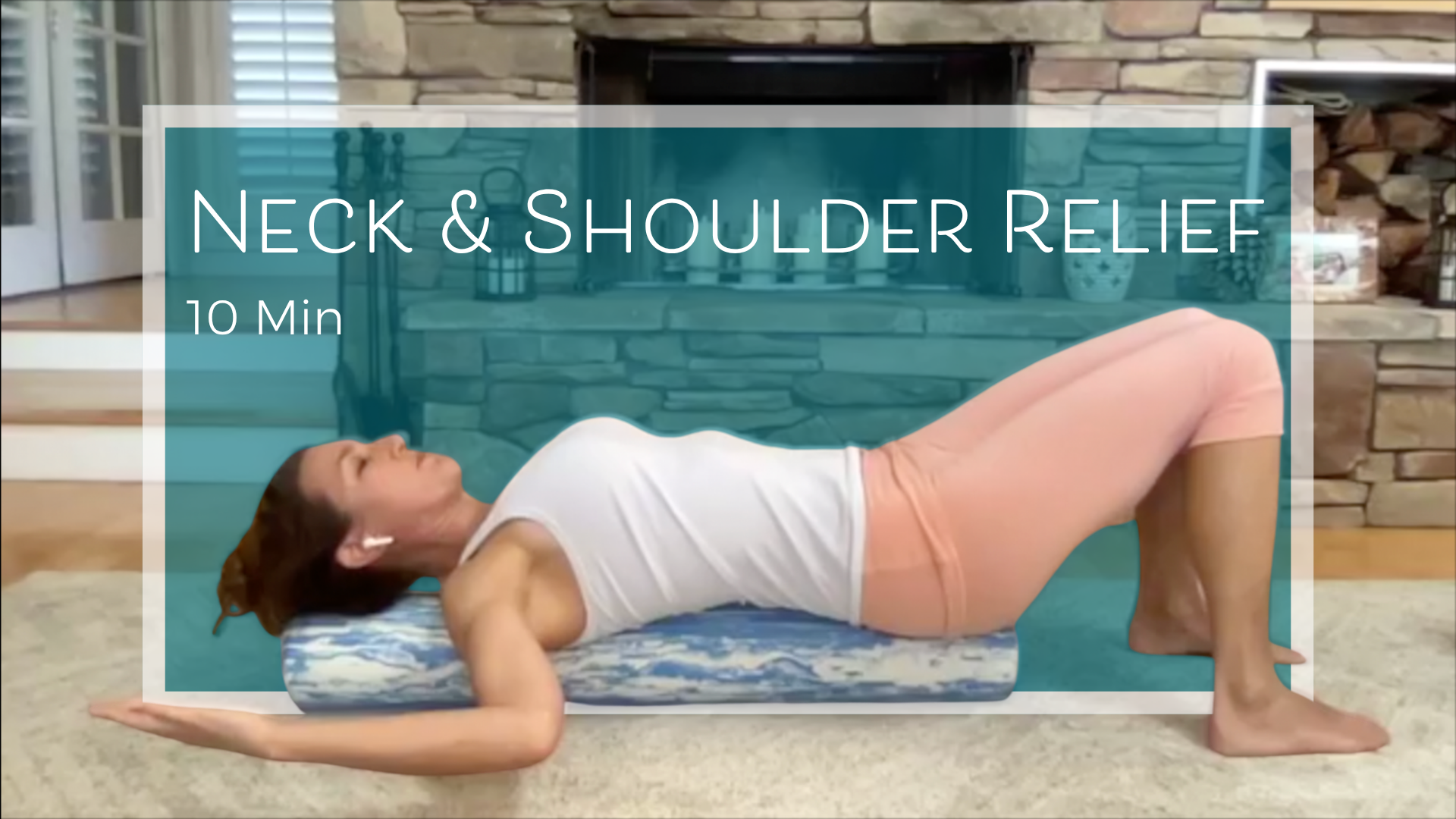
10-Minute Neck & Shoulder Tension Relief Routine
This short workout combines movement for the upper back, neck and shoulders with a few simple ways to notice where you may be carrying unnecessary tension.
The Takeaway
When you know you’ve been in one position for a while — or you start to feel tension creeping in — pause. Notice what your body is doing. Move. Get up. Change positions.
You don’t have to be perfect. The goal is simply to become better at noticing what your body is doing — because once you can feel a habit, you have the opportunity to change it.